Median Year-1 federal savings: $62,694 · IQR $51,846–$81,951

Maui, HI cost segregation: what 5 representative properties actually produce

Engine-derived ROI benchmarks for Maui-area short-term rentals, single-family rentals, and small commercial properties. Numbers come from running real fixtures through the Cost Seg Smart engine, same engine that produces your actual study. Studies from $495.

Operated by Cost Seg Smart. Studies are IRS-aligned with internal technical review & QC included. 5 fixture benchmarks computed May 2026.

The Maui numbers, distilled

$62,694
Median Year-1 federal savings (100% bonus, 37% bracket)
Interquartile range: $51,846 – $81,951
26.6%
Median reclassification ratio
IQR: 26.4% – 26.9% · Full range: 17.2% – 27.4%
44.5%
Median land allocation
IQR: 43.5% – 45.0%
5
Representative fixtures
Spanning 5 Maui sub-markets

Numbers above are engine-estimated outputs from running 5 representative fixtures, not promises about what your specific property will produce. Results vary based on actual property condition, year built, renovation history, county assessor data quality, and rental treatment (STR vs LTR). Full per-fixture table, neighborhood breakdown, and downloadable CSV/PDF on the Maui cost seg benchmarks page.

Why Maui is different

Honest framing first: Maui is the highest-regulatory-risk market in the Cost Seg Smart network as of 2026. Following the August 2023 Lahaina fires that destroyed much of West Maui, Maui County has announced an active short-term-rental phase-out plan targeting thousands of West Maui condo units (Kaanapali, Lahaina, parts of Honokowai), properties operating as STR for years would be required to convert to long-term-rental use, with phase-out timelines published by the county. For STR-intent investors, this means the §469 short-term-rental loophole that has historically supported Maui STR cost-seg strategies is at material risk for West Maui properties in particular. Buyers should consult Maui County's current ordinance and phase-out status before underwriting STR-revenue assumptions.

Hawaii's state tax position adds friction. HI top marginal rate (11%) is among the highest in the United States, and HI partially decouples from federal §168(k). For 2025+ acquisitions under OBBBA's 100% federal bonus, the HI-side timing mismatch on the bonus depreciation acceleration is meaningful, the federal Year-1 cash captures cleanly, but state-side acceleration defers over the regular MACRS schedule.

Where cost-seg still works in Maui: upcountry properties (Kula, Makawao) and east-Maui rural product (Hana) face lower phase-out risk because their STR demand is less concentrated and the phase-out plans target high-density West Maui resort corridors. North Shore (Paia, Haiku) sub-markets have moderate exposure. For long-term-rental investors not pursuing STR-loophole treatment, the regulatory phase-out is less of a concern, standard §469 passive-loss rules apply, and the cost-seg study captures the federal acceleration cleanly. The bottom-line assessment: Maui cost-seg works for LTR investors and for STR investors in lower-phase-out-risk sub-markets, but requires meaningful regulatory due diligence that doesn't exist in markets like Park City, Tahoe, or Destin.

Hawaii state tax position: Hawaii partially decouples from federal §168(k), HI requires addbacks for federal bonus depreciation with recovery on the regular MACRS schedule for state purposes. Combined with Hawaii's top 11% state rate, the state-side timing mismatch on cost-seg acceleration is meaningful. The federal §168(k) acceleration is unaffected; the HI-side reconciliation defers state benefit over the regular MACRS schedule.

Decoupling: Hawaii has periodically modified bonus depreciation conformity. Verify current-year treatment with your CPA.

Verify with your CPA. State tax conformity rules for federal §168(k) bonus depreciation are adjusted frequently, multiple states have modified their treatment two or more times in the past decade. The general framing on this page reflects our understanding as of May 2026, but you should always verify current-year treatment with a qualified CPA or tax attorney before relying on specific dollar projections for your situation.

Engine outputs: 5 Maui fixtures

These aren't rough estimates. Each fixture was run through the same engine that produces your actual study, RSMeans 2026 base costs, BLS PPI time index, county assessor land allocation, IRS Pub. 946 / Rev. Proc. 87-56 MACRS classification, 100% bonus depreciation per OBBBA.
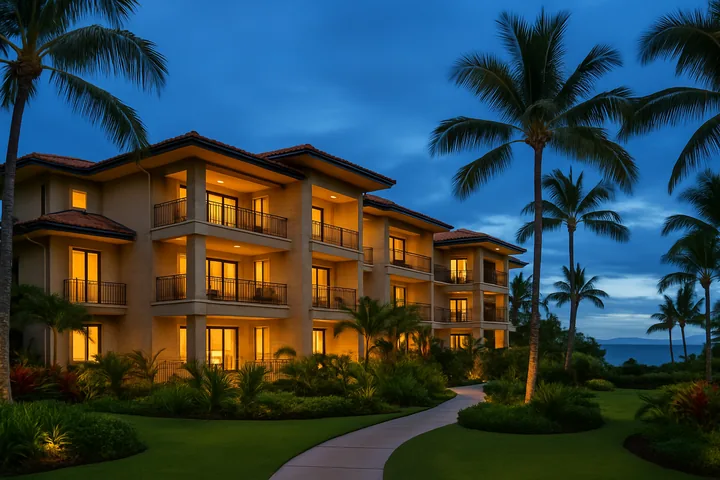
Illustrative Kaanapali Maui mid-rise condominium

Kaanapali Condo (regulatory-risk flagged)

$81,951
Year-1 federal savings @ 37% bracket, 100% bonus
Purchase price$1,485,000
Depreciable basis$823,432
Land allocation44.5%
5-year reclassified$163,500
15-year reclassified$53,324
Total reclass26.9%
West Maui (Kaanapali / Lahaina area) · CONDO · STR · Built 2002
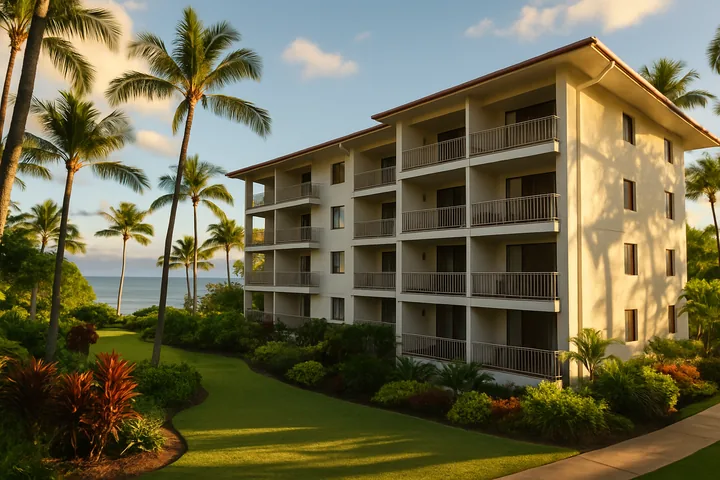
Illustrative Wailea South Maui resort condominium

Wailea Resort Condo

$102,062
Year-1 federal savings @ 37% bracket, 100% bonus
Purchase price$1,850,000
Depreciable basis$1,045,250
Land allocation43.5%
5-year reclassified$203,228
15-year reclassified$66,969
Total reclass26.4%
South Maui (Wailea / Kihei) · CONDO · STR · Built 2008
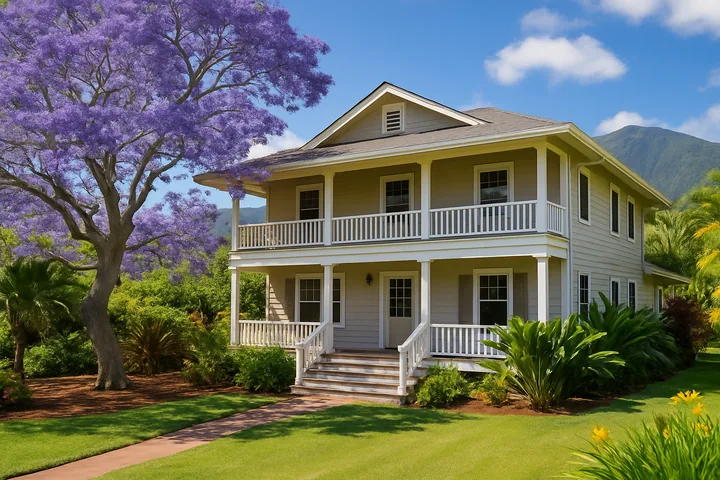
Illustrative Upcountry Kula Maui SFR

Upcountry Kula SFR

$62,694
Year-1 federal savings @ 37% bracket, 100% bonus
Purchase price$1,125,000
Depreciable basis$618,750
Land allocation45.0%
5-year reclassified$124,500
15-year reclassified$41,406
Total reclass27.4%
Upcountry Maui (Kula / Makawao) · SFR · STR · Built 1998
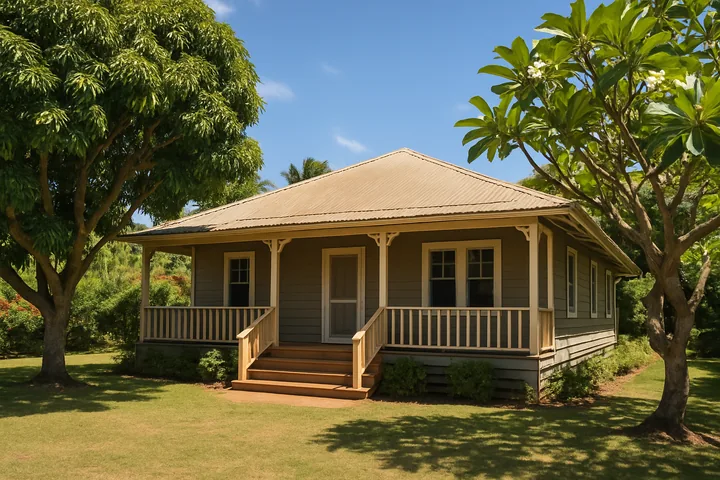
Illustrative Hana East Maui rural vacation rental

Hana Rural Vacation Rental

$51,846
Year-1 federal savings @ 37% bracket, 100% bonus
Purchase price$925,000
Depreciable basis$526,602
Land allocation43.1%
5-year reclassified$103,298
15-year reclassified$33,579
Total reclass26.6%
Hana (East Maui rural) · SFR · STR · Built 2010
Illustrative Paia North Shore Maui SFR

Paia North Shore SFR LTR

$46,470
Year-1 federal savings @ 37% bracket, 100% bonus
Purchase price$1,325,000
Depreciable basis$728,750
Land allocation45.0%
5-year reclassified$76,167
15-year reclassified$49,429
Total reclass17.2%
North Shore (Paia / Haiku) · SFR · Built 2005

Deep dive on each example →

Maui neighborhood profiles

Cost-seg ROI varies more by neighborhood than by city. Maui's 5 sub-markets each have their own land-allocation pattern and property archetype:

NeighborhoodTypical valueTypical land allocationProfile note
West Maui (Kaanapali / Lahaina area) $1,850,000 ~38% Highest STR concentration historically. CRITICAL: post-2023 fires, this area is subject to active phase-out plans affecting thousands of properties. Highest regulatory risk in the network.
South Maui (Wailea / Kihei) $1,485,000 ~34% Resort condo and SFR market. Subject to county STR ordinance and pending phase-out review. High land allocation due to resort-location scarcity premium.
Upcountry Maui (Kula / Makawao) $1,125,000 ~26% Higher-elevation residential away from beach corridors. Lower land allocation. Less STR-dependent, more residential-resident orientation, lower phase-out risk.
Hana (East Maui rural) $925,000 ~22% Remote east-Maui rural sub-market. Lower land allocation. Niche vacation-rental product with eco-tourism focus.
North Shore (Paia / Haiku) $1,325,000 ~30% Surfing-and-windsurfing-anchored sub-market. Mix of vacation rental and primary residence. Mid-tier land allocation. Lighter STR-phase-out exposure than West and South Maui.

Methodology note: "Typical land allocation" reflects baseline patterns for the sub-market. For ultra-premium or resort-tier inventory where reconstruction cost exceeds 2.0× the implied depreciable basis after subtracting baseline land, the engine applies a premium land floor (~50%) to keep the study within audit-defensible territory. This means individual fixture engine output may exceed the neighborhood typical, especially for resort-tier ski-in/ski-out, beachfront, or view-premium product where land scarcity dominates value. See the /data/ page for per-fixture land-source attribution. Results vary substantially by specific property condition, renovation history, and assessor records.

Regulatory context

CRITICAL REGULATORY CONTEXT: Following the August 2023 Lahaina fires, Maui County has announced an active short-term-rental phase-out plan targeting thousands of West Maui condo and SFR units historically operated as STR. The phase-out timeline and scope have evolved through 2024–2026 and remain subject to ongoing review. Properties in West Maui (Kaanapali, Lahaina, parts of Honokowai) face the highest phase-out risk. South Maui (Wailea, Kihei) is subject to existing county STR ordinance with potential phase-out review. Upcountry (Kula, Makawao), East Maui (Hana), and North Shore (Paia, Haiku) have lower phase-out exposure. STR-intent buyers must verify current ordinance status and phase-out applicability before underwriting any STR-revenue assumption. Material participation under §469 requires the standard tests, but hold-period assumptions in Maui must account for the regulatory-phase-out scenario where STR operation is forced to convert to LTR.

For the full IRS-rule reference layer (§168(k), §469 material participation, state conformity), see irsdepreciationrules.com, our open reference site.

Maui cost segregation FAQ

Should I do cost segregation on a West Maui condo given the active STR phase-out plan?

It depends on what you're underwriting. If your investment thesis assumes 10+ years of STR-revenue operation, the Maui County phase-out plan is a material risk to that assumption, West Maui condos in particular face meaningful timeline-and-scope uncertainty. If you can pivot the property to long-term-rental operation if the phase-out applies, cost-seg still works under standard §469 passive-loss rules; the federal acceleration captures cleanly regardless of STR vs LTR operation. If the entire investment thesis depends on STR-only operation, do regulatory due diligence carefully before closing. The cost-seg study itself doesn't change based on STR vs LTR mode (engine reclassification works for both), but the operating-economics overlay that funds the multi-year return on the cost-seg deduction does change.

Does the Lahaina fire and resulting STR phase-out actually affect cost-seg studies on properties not destroyed in the fire?

Indirectly. The cost-seg engine treats your property based on its actual current condition and renovation history, fires that destroyed neighboring structures don't affect your property's MACRS classification or component analysis directly. What the post-fire regulatory environment affects is two upstream factors. (1) Hold-period assumption: West Maui properties that survived the fire are subject to the broader county phase-out review; conservative hold-period modeling is warranted. (2) Insurance and capital-assessment cadence: post-fire insurance costs across Maui have risen materially, and condo associations are facing substantial capital assessments for rebuilding-related work. Both compound against the operating return that pairs with the Year-1 cost-seg deduction.

Is Maui still a viable STR cost-seg market for non-West-Maui properties?

Yes, with appropriate due diligence. Upcountry Maui (Kula, Makawao), East Maui (Hana), and North Shore (Paia, Haiku) sub-markets have lower phase-out exposure than West and South Maui because their STR concentrations are lower and they're less central to the post-fire regulatory review. STR-intent buyers in these sub-markets should still verify current county ordinance status, but the structural risk is materially lower than in Kaanapali, Lahaina, or Wailea. South Maui (Wailea, Kihei) sits in the middle, historically permissive STR operation, but subject to potential phase-out review and elevated regulatory uncertainty. Cost-seg engine output is identical across all sub-markets; what differs is the operating-economics-and-hold-period overlay.

How does Hawaii's 11% top marginal income tax interact with federal cost-seg savings?

Hawaii partially decouples from federal §168(k), with addbacks on the HI return and state-side recovery over the regular MACRS schedule. For a Maui owner taking $120,000 of accelerated reclassification at the 37% federal bracket, federal Year-1 cash savings is $44,400, that captures cleanly. The HI-side savings at the 11% top marginal rate would be $13,200 if Hawaii conformed fully, but because of partial decoupling, that HI acceleration is mostly deferred over the regular MACRS schedule rather than concentrated in Year 1. Combined with Maui's regulatory STR phase-out risk, the effective after-tax math on Maui cost-seg is materially less attractive than in no-state-tax markets (FL, TX, TN, NV) or federal-conforming states (CO, UT).

Should I consider cost segregation on a Maui long-term-rental property?

Yes, for LTR investors who can use cost-seg passive losses against passive rental income or who qualify as real-estate professionals, Maui LTR cost-seg works cleanly. The federal acceleration at 100% under OBBBA captures regardless of STR or LTR status (the engine treats them differently but both produce meaningful reclassification). The regulatory phase-out plans target STR operation, not LTR, converting a property to LTR (or buying an LTR-already-operating property) sidesteps the phase-out risk entirely. Standard §469 passive-loss rules apply, real-estate-professional status under §469(c)(7) is the typical path to W-2 offset for high-income Maui LTR holders, and the cost-seg federal benefit at the typical Maui price points produces meaningful Year-1 cash relief.

More general cost-seg questions answered at costsegsmart.com/faq/.

Ready to run your Maui study?

Cost Seg Smart studies are IRS-aligned, engineering-reviewed, and include written audit defense. Pricing is transparent and starts at $495 for residential properties under $300K, full pricing on the main site.